Feeling ready for your G road test is not the same as being technically ready. G road test readiness is measured against a specific set of examiner criteria, not your comfort level behind the wheel. Drivers in Ottawa who confuse the two often show up underprepared and lose test fees they could have kept.
The Ontario Ministry of Transportation defines the G test as an advanced evaluation of highway competency, independent decision-making, and overall road judgment. Before booking your test date, run through these objective signs.
You Can Merge on the Highway Without Hesitation
Highway merging is the defining skill of the G road test. Ottawa drivers must demonstrate confident entry onto roads running at 80–100 km/h, including the 417 and Queensway ramps that appear on test routes.
Ready means more than just getting on the highway. It means:
- Using the full acceleration lane to match traffic speed before merging
- Completing a full shoulder check in addition to mirror scanning
- Selecting a safe gap and committing, with no last-second braking or hesitation
- Maintaining lane discipline after merging without drifting
If you’re still second-guessing your entry point or relying on a gap that isn’t quite there, you’re not ready. DriveTest evaluators monitor highway technique closely and mark hesitation as a significant deduction.
Targeted preparation makes the difference. Structured G road test preparation in Ottawa builds exactly this type of muscle memory through repeated highway practice with a qualified instructor rather than casual supervised drives.
Your G Road Test Readiness Shows When Your Instructor Rarely Corrects You
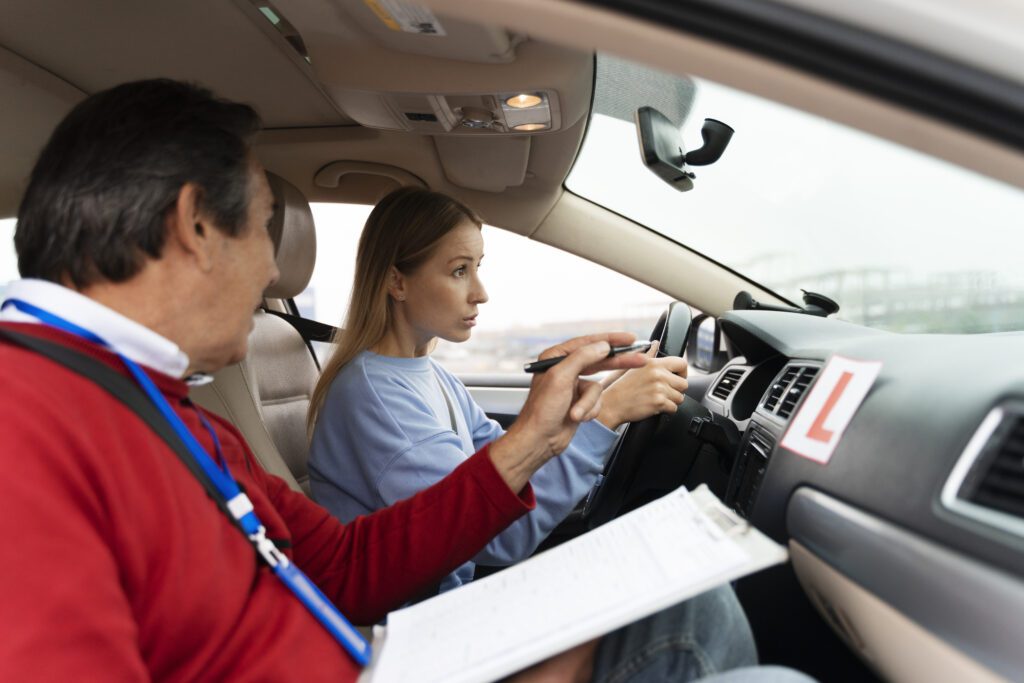
When your instructor stops intervening regularly, that’s a measurable indicator of G road test readiness, not a coincidence. Instructors track correction frequency deliberately.
Understanding the difference between error types matters here:
- Minor errors are occasional and don’t endanger others — slightly wide turns, brief mirror delays
- Critical errors are automatic fails — running a stop sign, failing to yield, unsafe lane changes
- Pattern errors are repeated minors that reveal a systematic gap in technique
If your instructor is still prompting you on mirror checks, commenting on your following distance, or reminding you to shoulder-check before every lane change, these are patterns — not one-off mistakes. Patterns don’t disappear on test day; they intensify under pressure.
Students enrolled in professional driving lessons in Ottawa receive structured feedback that specifically targets pattern elimination before booking a test.
You Make Independent Decisions Without Freezing
The G test removes all instructor guidance. You are alone with an examiner who says nothing helpful, they observe and record. Your readiness depends entirely on whether your decisions happen independently and without delay.
Signs you’re making independent decisions effectively:
- You assess intersections without waiting for a prompt
- You initiate lane changes when safe without being told
- You adjust speed proactively based on road conditions, not reactively after something happens
- Your defensive scanning happens automatically, not as a checklist you run through out loud
If someone in the passenger seat (your instructor, a family member) is still verbally guiding your decisions, your brain is borrowing their confidence rather than running on its own. That borrowed confidence disappears the moment a stranger with a clipboard sits next to you.
G Road Test Readiness Requires Passing a Full Mock Test Under Real Conditions
A mock test is the closest proxy for the real exam. It simulates the exact pressure profile of the G road test: no coaching, unfamiliar silence, and real decisions made at real speed.
What a properly structured mock test includes:
- A full driving route without any hints or corrections from the evaluator
- Stop-and-start assessment at the end, not mid-route
- Scoring against the same criteria DriveTest examiners use
- Debrief that identifies residual patterns before they become failures
If you’ve never completed a full, silent mock run, you have a significant knowledge gap about your own driving. You may be performing well in a coached environment and still have critical errors that only surface without a guide.
Before your test date, Contact us to identify exactly where you stand against examiner standards.
You Understand Why You’re Ready, Not Just That You Feel Ready
The most telling sign of real G road test readiness is the ability to explain your own competence. Can you articulate why your highway merge is correct? Can you describe what you check before a lane change and in what order?
Drivers who truly know what they’re doing don’t just do it, they understand it. That understanding comes from structured instruction, corrected repetition, and objective evaluation.
Feeling ready is a mood. Being ready is a demonstrated skill level.
Take the Final Step Toward Passing Your G Road Test
Your G road test is a technical evaluation, and it deserves a technical approach. If you’ve worked through this list and found gaps, that’s not a reason to delay your goal. It’s a reason to close those gaps the right way.
At Steer’nGo Driving School in Ottawa, our G road test preparation program is built around measurable readiness, not guesswork. Contact us today to schedule your pre-test evaluation and walk into your DriveTest appointment knowing exactly where you stand.
Frequently Asked Questions
1. How do I know if I’m ready for my G road test?
You’re ready when you consistently demonstrate safe highway merging, confident lane changes, proper speed management, hazard awareness, and calm decision-making without instructor intervention during full-length mock G road tests.
2. What skills are examiners looking for during the G road test?
Examiners assess highway driving, mirror checks, blind-spot checks, smooth lane changes, safe following distance, speed control, defensive driving habits, and overall confidence while navigating real traffic conditions.
3. Should I take a mock test before booking my G test?
Yes. A mock G road test identifies weaknesses in merging, observation, and lane discipline, giving you measurable feedback so you can improve specific skills before your official DriveTest appointment.
4. How important is highway driving experience for the G test?
Highway experience is essential. You must merge confidently at traffic speed, maintain proper spacing, change lanes safely, and exit smoothly while demonstrating full control and awareness at higher speeds.
5. Can I pass the G road test if I still feel nervous?
Yes, mild nerves are normal. However, you should still perform consistently, make safe decisions, follow traffic rules, and maintain composure without critical errors during practice drives.