

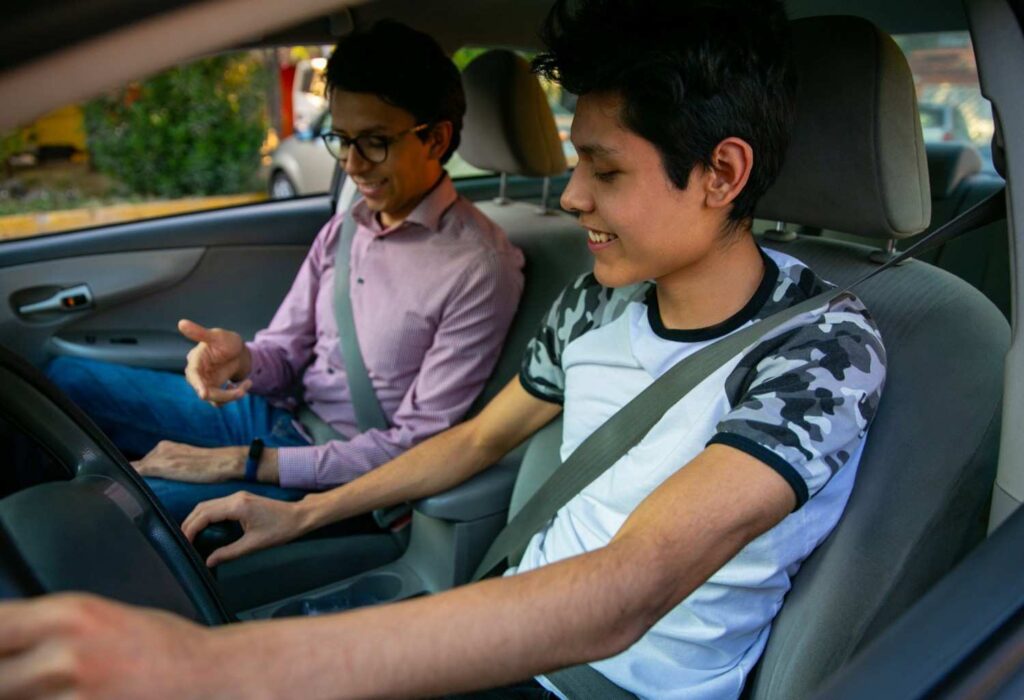
Helping teens learn to drive safely starts with understanding Ontario’s licensing rules and building good habits from day one. As a parent, you play a critical role in reinforcing what professional instructors teach. This guide covers how to help teens learn to drive safely, from supervised practice to knowing when to step back and let the experts lead.
Understand Ontario’s Graduated Licensing System
Before your teen gets behind the wheel, you need to understand how Ontario’s licensing system works. The province uses a Graduated Licensing System (GLS) that eases new drivers into full driving privileges over time.
Here is how the process works:
- G1 Licence: Minimum age is 16. Your teen must pass a knowledge test and is restricted to driving only with a fully licensed driver (4+ years) in the passenger seat.
- G2 Road Test: After 12 months with a G1 (or 8 months with a certified MTO-approved BDE course), your teen can take the G2 road test.
- G Licence: After passing the G2 road test, your teen has 5 years to complete the full G road test.
According to the Ontario Ministry of Transportation, completing a Ministry-approved Beginner Driver Education (BDE) course allows new drivers to take the G2 road test after just 8 months instead of the standard 12. That is a four-month head start, and it means your teen is learning from certified professionals, not just improvising.
Knowing these rules helps you set realistic timelines and expectations. Rushing the process or skipping professional training often leads to bad habits that are hard to undo.
Create a Safe Practice Environment
Once your teen has their G1, supervised practice sessions are an important part of building confidence. But not all practice environments are equal.
Start with low-risk settings before progressing to busier roads:
- Empty parking lots for steering, braking, and acceleration basics
- Quiet residential streets with low speed limits and minimal traffic
- Low-traffic roads during off-peak hours to build lane discipline
- Suburban arterials once your teen is comfortable with the basics
Keep sessions short. 30 to 45 minutes is usually enough. Fatigue and frustration reduce learning quality. Always remain calm and give clear, simple directions before your teen needs to act, not during the moment.
Avoid using your practice sessions as a time to correct every small mistake. Focus on one or two skills per session and build from there.
Teach Defensive Driving Early
One of the most important gifts you can give a new driver is a defensive driving mindset. Defensive driving is not just a technique. It is a way of thinking about the road.
Key defensive driving habits to reinforce during practice:
- Scanning ahead: Encourage your teen to look 10 to 15 seconds ahead, not just directly in front of the car.
- Hazard awareness: Help them identify potential dangers early. Pedestrians stepping off curbs, doors opening on parked vehicles, cyclists in blind spots.
- Following distance: Reinforce the 3-second rule at lower speeds and 4 or more seconds on highways or in wet conditions.
- Mirror checks: Remind your teen to use all mirrors consistently, especially before lane changes and when slowing down.
Phone use is one of the leading causes of collisions among new drivers. Review Ontario’s distracted driving rules with your teen before every practice session so they understand the legal and safety consequences from the start.
These habits take time to develop. Consistent reinforcement from a trusted adult, combined with structured training from a professional instructor, is the most effective combination.
For structured, professional guidance on technique and road awareness, professional driving lessons in Ottawa give your teen the expert coaching they need alongside your supervised practice.
Balance Supervision With Professional Training
Many parents assume that supervised practice alone is sufficient preparation for the road test. In reality, the most successful new drivers combine regular practice sessions with professional instruction.
Here is why professional training matters:
- Certified instructors know exactly what DriveTest examiners look for.
- They can identify and correct poor habits before they become automatic.
- Dual-control vehicles provide a safe environment for high-stress situations like highway driving and emergency stops.
- Professional lessons build test-day confidence in ways that casual parent supervision cannot replicate.
Your role as a parent is to reinforce what the instructor teaches, not to introduce different methods or contradict the curriculum. This consistency between professional lessons and supervised practice is what leads to first-time test success.
If your teen is getting ready to move toward their road test, G2 driving preparation in Ottawa offers targeted coaching designed specifically around the G2 road test requirements.
Set Clear Expectations and Build Gradually
Beyond the technical skills, helping teens learn to drive safely also means setting clear behavioural standards and gradually expanding their independence.
Start by agreeing on house rules before they ever take the keys:
- No phone use while driving. Not even hands-free initially.
- No passengers in the car during the G1 phase (unless permitted by licence conditions)
- No driving after dark until confidence and skill levels are firmly established
- Immediate reporting of any close calls, incidents, or anxiety on the road
Gradually introduce more challenging conditions. Night driving, rain, and highway speeds should only be added after your teen is consistently calm and competent in easier environments. Trust the process and resist the temptation to rush.
Conclusion
Your involvement as a parent is one of the biggest factors in your teen’s road success. But the most effective approach combines your guidance and encouragement with expert professional instruction. Steer’nGo’s certified instructors are experienced in helping teens build real-world driving skills and road test confidence.
Ready to get started? Book driving lessons for teens today and give your teen the professional foundation they need to drive safely for life.
Frequently Asked Questions
When should my teen start learning to drive in Ontario?
Teens can apply for their G1 licence at age 16. It is generally best to start as early as eligible, since the graduated licensing process takes a minimum of 20 months, or 16 months with a certified BDE course, to complete.
How many supervised practice hours does my teen need before their G2 test?
Ontario does not set a mandatory number of practice hours for G1 drivers, but most experts recommend at least 50 hours of supervised driving, including 10 hours at night, to build genuine readiness for the G2 road test.
What are the most common mistakes teens make during road tests?
Common G2 road test failures include incomplete stops at stop signs, not checking mirrors before lane changes, improper speed management, and poor observation at intersections. Professional coaching addresses each of these directly.
Can I be in the car during my teen’s professional driving lessons?
Most driving schools, including Steer’nGo, conduct in-car lessons one-on-one with the certified instructor. This allows the instructor to manage the environment without conflicting cues, which leads to faster, cleaner learning outcomes.
What is the difference between a G1 and a G2 licence in Ontario?
A G1 is the learner’s permit stage with strict restrictions. Your teen must drive with a fully licensed driver and cannot drive on 400-series highways or after midnight. A G2 removes most restrictions and allows independent driving, except for certain conditions for drivers 19 and under.